





Key takeaways
Most people use “modern” and “contemporary” to mean the same thing, and in a furniture store, that usually works. In design terms, they’re different. Modern furniture is a period: the clean-lined, function-first designs that came out of the early and mid-20th century. Contemporary furniture is the present: whatever designers and homeowners are choosing right now, which changes every few years.
What Is Modern Furniture?
Modern furniture comes from a specific stretch of design history, roughly the 1920s through the 1960s. It grew out of the Bauhaus, a German design school, and the idea that a chair should be shaped by what it does, made from materials shown as themselves, and stripped of decoration.
That produced a recognizable look. Tubular steel, molded plywood, leather, teak, and walnut. Straight lines, gentle geometric curves, legs you can see underneath. No carving, no skirts, no ornament for its own sake.
It also produced the pieces people still name: Marcel Breuer’s tubular-steel Wassily chair, the Barcelona chair, the Eames lounge chair, and Saarinen’s Tulip chair. Our guide to the iconic furniture pieces of the 20th century covers them one by one, with their dates and who still makes each one.
One more distinction, since it trips people up: mid-century modern is the warmer, more colorful slice of the same period, from about the mid-1940s to the end of the 1960s. It’s part of modern, not a separate style.
What Is Contemporary Furniture?
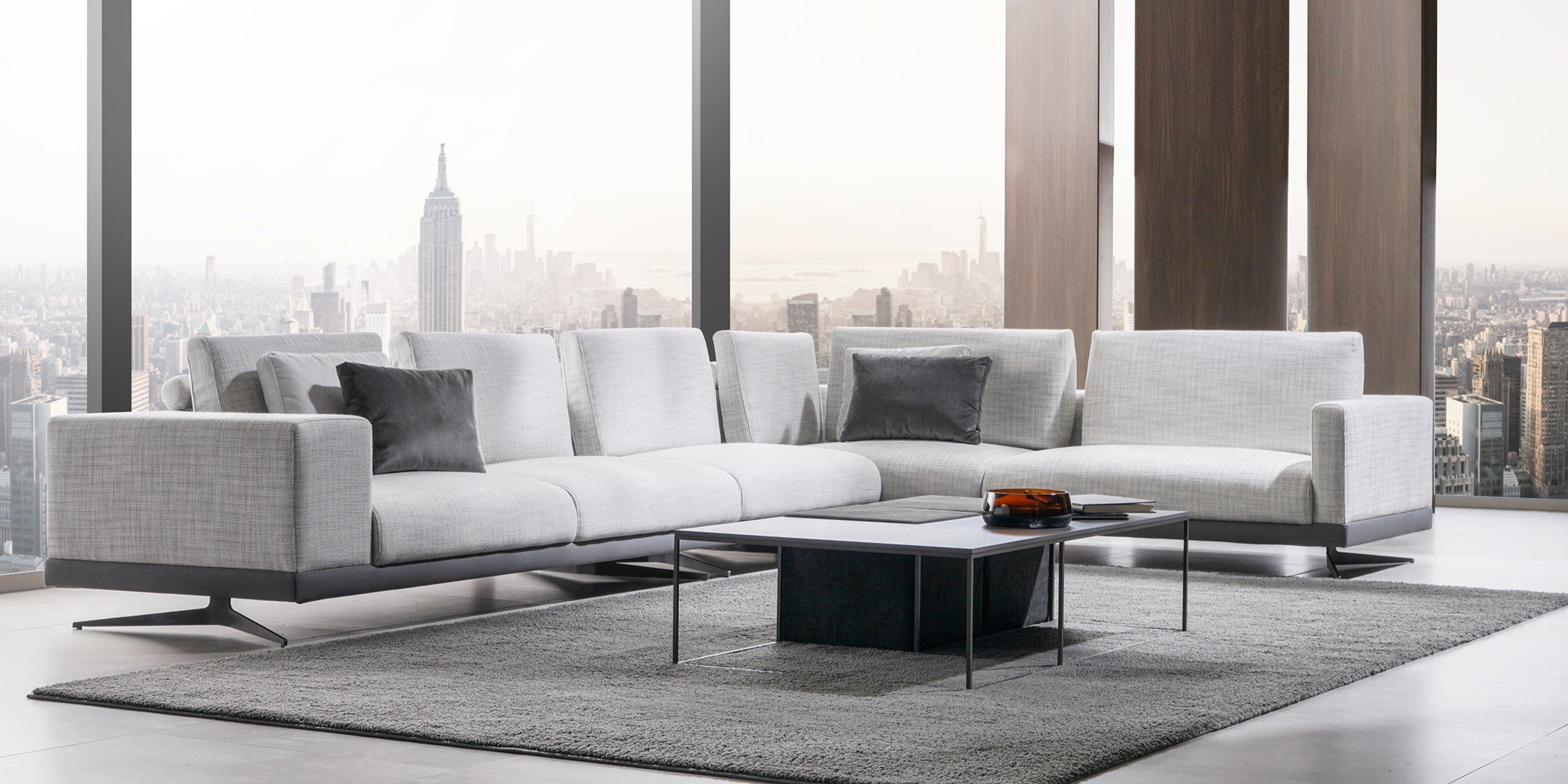
Contemporary furniture is the furniture of now. It takes its cues from what’s popular at the moment, borrows the clean lines of modern design, and adds whatever today’s homes ask for: more comfort, softer shapes, and a wider mix of materials. Because it follows the present, it keeps changing. It borrows from earlier decades, such as the floating curved sofas of the 1950s and 1970s, and it follows how we live now: open-plan rooms, working from home, and smaller city apartments all ask for pieces that do more and fit the wall exactly.
Today, contemporary furniture design shares a few characteristics.

Clean Lines With Softer Curves
The straight lines are still there, but the edges have relaxed. Curved sofas, rounded armchairs, and soft-shell seating are taking the place of hard rectangles. A contemporary living room reads as calm rather than strict.
A Neutral Base With Warm Accents
Contemporary rooms still start from neutrals, but the all-gray look has given way to warmer tones: taupe, camel, cream, and the earthy accents of terracotta, olive, and deep brown. Pattern stays small and lives in pillows, rugs, and art rather than on the sofa.
Mixed, Natural Materials
Where modern furniture celebrated one material at a time, contemporary pieces mix them: warm woods with stone or ceramic tops, metal frames with textured fabric, glass with wood. Fabrics like bouclé and linen add texture, and responsibly sourced and recycled materials matter more to buyers than they used to. Our fabric collection shows the range on one page.
Comfort and Scale First
A contemporary sofa is deeper, lower, and softer than its modern ancestors, because it’s designed for how people actually sit in a living room now. Low, long pieces keep sight lines open.
Modular and Multifunctional Pieces
If you’re shopping, this is the trait to look for. A modular sofa made of separate sections can be a long seat for guests one week and two smaller groups the next, and you can add a section years later. Choosing the size, fabric, and configuration of a piece means it fits the room exactly. Our guide to sectional vs modular sofas explains the difference in practice.
Modern vs Contemporary Furniture: The Differences at a Glance
The two styles overlap on clean lines and an uncluttered look. Everything else differs.
|
Modern furniture |
Contemporary furniture |
|
|---|---|---|
|
Era |
A fixed period, roughly 1920s to 1960s |
Now, and always updating |
|
Philosophy |
Form follows function; show the material |
Comfort and the way people live now |
|
Lines and shapes |
Straight, geometric, light on the floor |
Softer, curvier, more sculptural |
|
Materials |
Tubular steel, molded plywood, leather, teak, walnut |
Mixed wood, stone, glass, metal, textured fabrics |
|
Color palette |
Warm neutrals with primary accents |
Neutral base with earthy or bold accents |
|
Ornament |
None |
Texture in place of decoration |
|
Does it change? |
No; the period is closed |
Yes, every few years |
|
Examples |
Wassily, Barcelona, Eames lounge, Tulip |
Curved sofas such as our Mix Curved Lounge, modular sectionals, stone-top tables |
Modern or Contemporary: Which Should You Choose? (Our Take)
For the pieces you use every day, like the sofa, the bed, and storage, choose contemporary. They’re built for how people sit and live now, and they can be sized to your room. Then add modern through one accent piece, such as a lounge chair or a lamp.
Three questions settle the rest:
-
How do you use the room? If it changes from movie night to a full house of guests, a modular sofa lets you add or move sections instead of buying again.
-
How long will you stay? Pieces bought for the long run should be made to last. Ours are made in Europe using certified European materials, and our frames carry a lifetime warranty, with a 6-year limited warranty on materials, mechanisms, and upholstery, excluding wear and tear.
-
How much does the space need to flex? An awkward wall or a small apartment is where made-to-measure pays off: our custom-made closets are designed to the inch, and the fabric and finish of each piece are yours to choose.
How to Mix Modern and Contemporary Furniture in the Same Room
The two styles mix well, because they share the clean-lined base. A mix goes wrong when no single piece leads the room. Three rules keep it deliberate.

1. Pick one anchor and let the rest support it. In most rooms, the anchor is the sofa. A modular sofa in a plain, warm fabric gives you a contemporary base, and one modern icon, a leather lounge chair or a tubular-steel armchair, becomes the piece everyone notices. Two icons in one room compete; one reads as a choice. Our guide to how to choose a sofa covers getting that anchor right.
2. Repeat one material or color across both. The easiest bridge is a wood tone: walnut in the chair frame, walnut in the coffee table, walnut in the media unit. Black metal, cognac leather, or a single warm neutral do the same job. If the modern piece and the contemporary pieces share one material, they look like they belong together.
3. Keep the scale and the line family consistent. Low and long goes with low and long. A leggy modern chair next to a low contemporary sofa works because both sit light on the floor; one chunky, skirted piece in a leggy room is what makes the mix look accidental. Match the heights of seats and tables, and keep the gaps between pieces even.
Two styling habits finish the job. Group accessories in odd numbers, and leave open floor around each piece. Our guide to living room decor ideas picks up from here, and the living room collection shows the pieces in a room together.
See a Contemporary Sofa Anchor a Room
See how a contemporary sofa anchors a room, and bring a photo of the modern piece you’d like to keep. Our in-house designers work with you from first sketch to final detail, so the sofa, the fabric, and the finish are settled before anything is made. Book your design consultation, or find a LAZZONI showroom near you.
Frequently Asked Questions
What is considered modern furniture?
Modern is a style defined by a period, and it can still be made today. The period, the first half of the 20th century, is closed, but its look lives on: a sofa built last year with clean lines, visible legs, and no ornament is in the modern style, while a carved, skirted one is not. When you shop, look for the style rather than the date.
Is mid-century modern the same as modern furniture?
Mid-century modern is a slice of modern, so every mid-century piece is modern but not every modern piece is mid-century. The quickest way to spot the mid-century part in a shop is the warmth: tapered wooden legs, a splash of mustard or teal, and curves where strict modern pieces stay straight. It’s also the part of modern that mixes most easily into a contemporary room, for the same reason.
Is contemporary furniture going out of style?
It can’t, by definition, because contemporary means whatever is current. What dates a contemporary room is a trend color on the biggest piece, so the practical move is to keep the sofa, the bed, and the storage in a quiet neutral and let the room update through smaller things: pillows, a rug, a chair, art. That way the room stays current without the big pieces going anywhere.
What materials are used in contemporary furniture?
The usual ones are wood, stone, ceramic, metal, glass, bouclé, linen, and performance fabrics, often several in one piece. Choose by how the room is used: a sealed stone or ceramic top for a table where drinks land, a performance fabric for a sofa that kids or pets use, and a wood with visible grain for a piece you want to age well.
Is contemporary furniture the same as minimalist?
No. Minimalism is one trait contemporary design borrows: the uncluttered look with few pieces, but contemporary furniture is broader. It can be warm, textured, and generous in scale, with a curved sofa and a stone table in the same room. A minimalist room is almost always contemporary; a contemporary room doesn’t have to be minimalist.
Share:
8 Custom Closet Shoe Storage Ideas
How Much Does a Custom Closet Cost? Price Guide 2026