





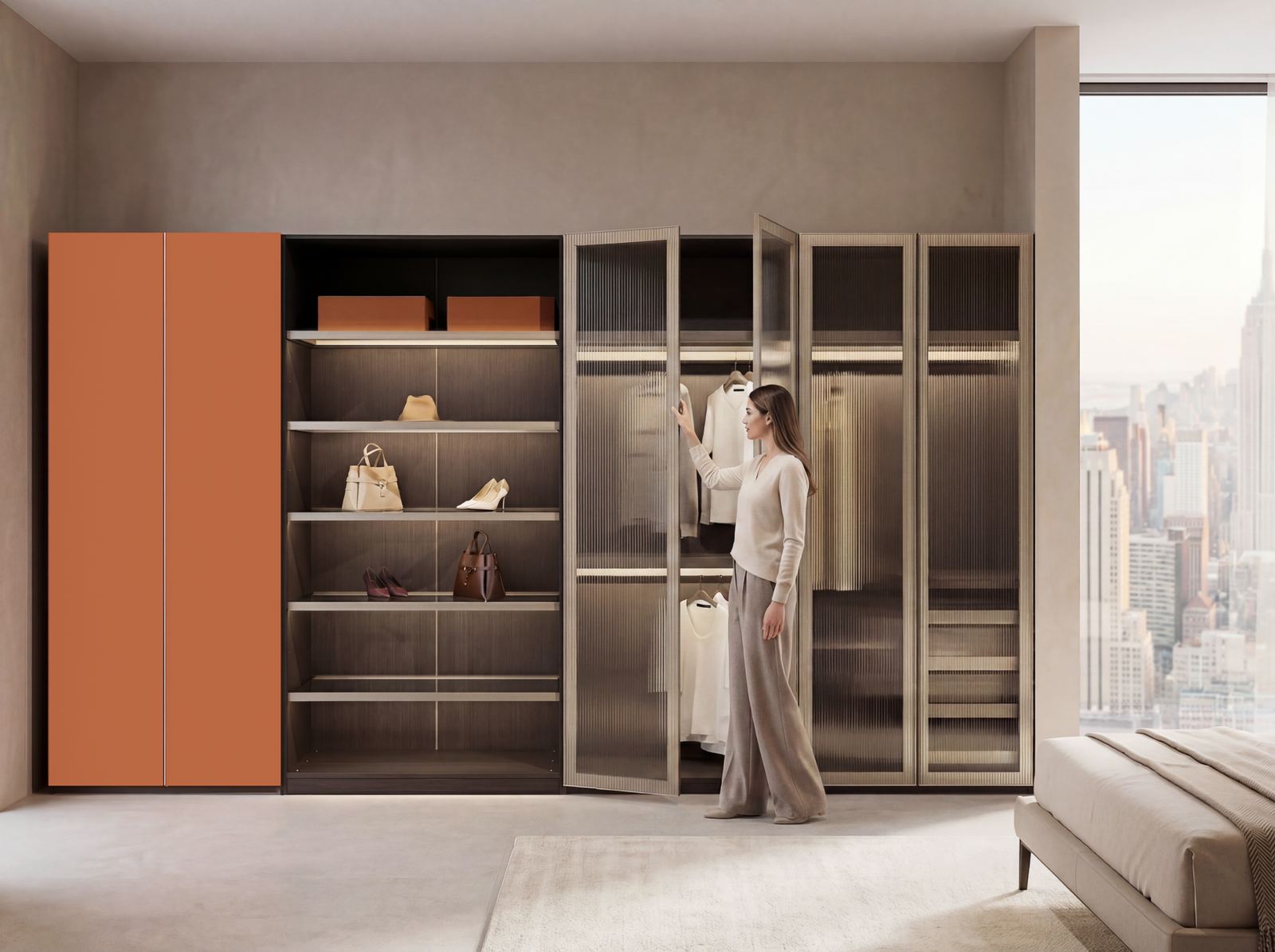
Effective closet organization begins earlier than most guides suggest. It starts with the storage itself, and with designing that storage around the way you actually use your wardrobe.
Decluttering is part of it, but only part. A closet that stays organized is one where every category has a place suited to it: hanging at the right heights, drawers for what should not be hung, shelving at the right depth for shoes and folded pieces, and dedicated compartments for accessories. The pieces you reach for daily sit where you can reach them easily. The vertical space is genuinely used rather than left as dead air above the rail. And the whole arrangement matches what you own, rather than asking your wardrobe to fit a layout it was never designed for.
Get that relationship right and organization becomes something the closet supports rather than something you impose on it.
What follows is the full method, from clearing the space through to the accessories most closets leave to improvise, and then the part that determines whether any of it lasts.
Twelve Steps to an Organized Closet
1. Start with a Clean Slate
Not “sort through it.” Empty it, so you are looking at an empty space and a pile rather than a closet you are editing in place. Editing in place preserves the logic that stopped working, and it hides the actual volume.
Sort the pile into keep, donate, and discard. The rule that holds up best is a year: unworn in twelve months, and neither sentimental nor occasion-specific, means it goes. Be skeptical of “I’ll wear it when it fits again,” which quietly consumes more space than almost anything else you own.
2. Categorize Intentionally
Group everything before a single item goes back: shirts, trousers, dresses, knitwear, outerwear, workwear, shoes, accessories. Do it fully before anything is hung, or you end up with a closet organized in the order you happened to pick things up.
Color or type? Type first, then color within each type. Purely color-sorted closets photograph beautifully and work poorly, because you go looking for a sweater rather than for a green thing. Color sorting inside each type also makes duplicates and gaps obvious.
3. Hang in an Order the Closet Can Be Read
The order is type, then length within type, then color within length.
Length is the step people skip and the one that pays. When short garments hang together, the space beneath becomes a single usable block for a shoe shelf or drawer unit. When short and long alternate, that space scatters into pockets too small to use.

Hang everything facing the same direction and use one hanger type throughout. Mismatched hangers put garments at different depths, which reads as disorder however well sorted the contents are.
4. Hang What Wrinkles, Fold What Does Not
Hang anything that creases easily: dresses, blouses, skirts, tailored trousers. Fold sturdier pieces such as denim and cotton t-shirts.
One addition most guides leave out: knitwear should always be folded, however robust it seems. Sweaters on a hanger stretch at the shoulder under their own weight and the distortion does not come out. Blazers and coats go the other way, needing a hanger with genuine shoulder shape.
5. Make Better Use of Vertical Space
The largest capacity gain available in most closets, and a matter of design rather than effort.
A standard closet has one rod at about 65 inches. Shirts and jackets occupy perhaps 40 inches beneath it, leaving 25 to 30 inches of dead air above the floor. Fit two rods instead, at 40 and 80 inches, and a six-foot wall becomes 12 linear feet of hanging in the same footprint. Reserve one full-height run for coats and long dresses, which rarely need more than 2 to 3 feet of rail.
Then look up. Cabinetry that stops at 84 inches in a room with nine-foot ceilings leaves a band ideal for luggage and seasonal storage unused across the whole wall.

6. Zone by How Often You Reach for Things
Add frequency as a second axis alongside category.
-
40 to 72 inches is the prime zone, reachable without stretching or crouching. Daily and weekly pieces only.
-
Above 72 inches for seasonal and occasional items.
-
Below 40 inches and the top shelf for archive storage: luggage, off-season bedding.
The common error is storing something used twice a year at eye level while daily shirts sit on a low shelf.

7. Give Folded Clothing Proper Storage
Folded clothing is where organization projects come undone. Stacked on a deep shelf, the pile collapses the first time something is pulled from the middle.
Drawers solve it: contents stay ordered and nothing needs restacking. Eighteen inches is the minimum depth, 24 allows multiple rows. Where drawers are not possible, open shelving with vertical dividers is next best. Shelving of 12 to 16 inches suits folded pieces; deeper creates a back row that disappears.
8. Give Accessories Dedicated Storage
The category most closets leave to improvise, and the one that most rewards being designed for.
-
Handbags. Standing on open shelving with dividers, not stacked, which creases and distorts them.
-
Belts and scarves. Shallow divided drawers or pull-out racks. Rolled rather than folded avoids permanent creases.
-
Jewelry and watches. Shallow compartmentalized drawers near eye level, ideally felt-lined. Compartmentalization matters far more than depth.
-
Shoes. Shelving around 12 inches deep with 12 to 15 inches of clearance. Heel-to-toe fits more pairs than side by side.
The common thread is that accessories need compartments rather than volume.
9. How to Organize a Small Closet with Lots of Clothes
The instinct is to optimize the space. The more effective move is to reduce the volume it has to hold.
Move off-season clothing out entirely. Winter coats occupying prime rail space in July is the most avoidable capacity loss there is. Then apply the vertical fix from step 5, which matters more here than anywhere. After that: vertical dividers, shallower shoe shelving, slim hangers, and storage taken to the ceiling.
If the closet is genuinely too small even then, no arrangement will fix it, and the choice is between reducing the wardrobe or increasing the storage. Our guides to walk-in closet sizing and the types of closets cover both.
10. Six Details That Decide Whether It Lasts
-
One rod height for everything, wasting the lower half of the closet.
-
Storage too deep to see into. Unidentifiable contents are effectively gone.
-
Shelving deeper than 16 inches, creating a back row nobody reaches.
-
Frequently used pieces in hard-to-reach zones.
-
Mixed hanger types, which read as disorder however well sorted.
-
Filling to capacity, leaving nowhere to put anything back.
Five of the six are decisions about how the closet is built, not about how disciplined its owner is.
11. Why a Well-Designed Closet System Makes Organization Last
The method above works, and it meets a limit: the storage itself. A standard closet offers no drawers, one hanging height, a single depth, and stops short of the ceiling. Organize it perfectly and it drifts back, because every time you put something away you work against the layout.
A designed system removes that friction by planning the space as storage types matched to the wardrobe:
-
Hanging at two or three heights, sized to the garments on each run
-
Drawers for folded pieces, at depths chosen for what goes in them
-
Shelving at varied depths, shallower for shoes and folded items
-
Dedicated compartments for jewelry, belts, and small pieces
-
Full use of the vertical, floor to actual ceiling
Organization becomes sustainable when the storage is designed around the wardrobe it holds. Putting something away means placing it where it belongs rather than finding somewhere it fits.
That is a functional idea before it is an aesthetic one, closer to the Japanese principle that a well-designed object should make the right action the easy one. A closet that stays tidy is rarely the work of a more disciplined owner. It is usually one where the storage removed the friction.
This is what LAZZONI builds: closets made to the inch, with more than 200 materials. The closet modules range from a versatile modular wardrobe with shelving to a full walk-in system with integrated drawers, and our closet design service sets the configuration against what you own. Vetrina glass closets in extra clear, fluted, reflective, and mirrored finishes, where glass reads as depth rather than as a wall. Ferma solid closets in wood, fabric, leather, and lacquered finishes. Island storage units with customizable drawers, glass tops, and integrated lighting, designed around accessories specifically.
Glass and solid fronts do different jobs, and the strongest closets mix them. Use glass on the display sections: dresses, suits, and the pieces worth seeing behind the door. Vetrina’s extra clear and reflective finishes suit those runs, and fluted glass gives the impression of the wardrobe without every detail of it. Use solid fronts on the working sections, the ones you already know will not stay tidy: hampers, and the folded shorts and t-shirts pulled from the middle of a stack. Ferma’s wood, fabric, leather, and lacquered finishes close those off completely. Specifying both across one closet is what lets a wardrobe be shown where display flatters it and concealed where it does not.

Everything is manufactured in Europe using certified European materials under ISO 9001:2015, with FSC certification and CARB2 and E1 compliance on panels, listed on our certifications page.
12. Keeping It That Way
Ten minutes a week. Rehang what migrated to the chair, return shoes to their shelf, straighten the stacks. This prevents the annual overhaul.
One in, one out. When you buy something, decide what it replaces before it enters the closet.
A full reset twice a year, at seasonal changeover.
If a closet needs a complete overhaul more often than that, treat it as diagnostic: the storage does not fit what is being stored.
Designing a Closet That Stays Organized
Good habits and good design do different jobs. Habits determine how a closet looks this week. The design determines whether that is still true in six months.
If you have worked through everything above and the closet still resists you, the constraint is likely structural: one rod where there should be two, no drawer storage, shelving at the wrong depths, or a foot of unused wall above the cabinetry.
LAZZONI’s in-house designers plan closets around the wardrobe they are meant to hold, working from what you own to the hanging heights, drawer configurations, shelf depths, and accessory storage that suit it. That planning is design service without designer prices: it comes with the closet rather than as a separate fee. Share your measurements or ask for help taking them, and you will see the layout as a 3D rendering before anything is made. 98% of customers report being happy with the result, per Google Top Rated. Book your design consultation, or visit a showroom to see the systems and materials in person.
Frequently Asked Questions
In what order should I hang my clothes in my closet?
Group by type first, then by length within each type, then by color within each length. Type grouping matches how you get dressed. Length ordering is the step most people skip, and it matters because sorting short garments together leaves a usable block of space beneath them instead of scattering dead air along the rail.
What details decide whether closet organization lasts?
Six, and most are design decisions rather than habits: one rod height for every garment, storage too deep to see into, shelving deeper than 16 inches, rarely used items in the most reachable zone, mixed hanger types, and filling to capacity so there is nowhere to put anything back. Each is fixable at the design stage.
How do I organize a small closet with lots of clothes?
Reduce the volume before optimizing the space. Move off-season clothing out entirely, since a meaningful share of any wardrobe is out of season. Then double the hanging with a second rod at 40 inches beneath one at 80, add shallow shelving for shoes, use vertical dividers, and take storage to the ceiling.
Does a custom closet system actually help you stay organized?
Yes, though not because it makes anyone tidier. It removes the layout problems that make disorganization hard to avoid, giving each category storage that fits it: hanging at two heights, drawers for folded pieces, shallow shoe shelving, and compartments for accessories. Organization becomes sustainable when the storage matches the wardrobe.
Should I organize my closet by color or by type?
By type first, then color within each type. Sorting purely by color looks striking and works poorly, because you go looking for a sweater rather than for a green thing. Color ordering within each type then makes the specific piece quick to spot, and makes duplicates and gaps obvious.
How should I store handbags and accessories in a closet?
Give each category storage suited to its shape. Structured handbags hold their form standing on open shelving rather than stacked. Belts and scarves suit shallow divided drawers or pull-out racks. Jewelry belongs in shallow compartmentalized drawers near eye level. Shoes need shelving around 12 inches deep.
How often should I reorganize my closet?
A full reset twice a year at seasonal changeover, plus about ten minutes a week. The seasonal pass rotates off-season pieces out and reassesses anything unworn. The weekly ten minutes keeps the full reset from being needed more often. Needing an overhaul more often usually means the storage does not match what is being stored.
Share:
Walk-In Closet Sizing: How Much Space You Actually Need
8 Types of Closets and How to Choose the Right One